“If you’ve spent any time online or in certain music lyrics, you’ve probably heard the phrase “Captain Save a Hoe.” It’s a crude, slangy way of describing a specific type of energy: usually a man who is determined to “rescue” a woman from her problems, habits, or lifestyle — often at great emotional and financial cost to himself — whether she asked for it or not”
Let’s be clear from the start: the term itself is disrespectful and rooted in misogyny. But the energy behind it — the savior complex, the compulsion to fix, fund, and rescue other people at your own expense — is very real, and it’s wrecking a lot of lives and relationships.
This article isn’t about shaming women or glorifying degrading language. It’s about examining why so many people fall into this “rescuer” role, why it rarely works the way they hope, and how to step out of this dynamic without becoming cold, bitter, or heartless.

What Is “Captain Save a Hoe” Energy, Really?
Strip away the slang and you’re left with this:
• Someone (often a man) chooses partners they see as “broken,” “lost,” or “in need.”
• They believe, consciously or not, “If I just love them hard enough, pay enough bills, fix enough problems, they’ll finally change — and then they’ll love me the way I deserve.”
• They confuse being needed with being valued.
This energy shows up as:
• Over-spending on someone who isn’t invested in you the same way.
• Over-giving emotionally to a person who gives bare minimum back.
• Defending their behavior to friends and family while you quietly suffer.
• Making excuses: “She’s just going through something,” “He didn’t mean that,” “Once we move in, it will be different.”
It’s the perfect recipe for resentment, exhaustion, and a broken sense of self-worth.
Where Does This Savior Energy Come From?
“Captain Save a Hoe” energy doesn’t appear out of nowhere. It’s usually rooted in deeper emotional patterns:
1. Childhood Conditioning
If you grew up in a home where you had to be the fixer, caretaker, or mediator, you may subconsciously believe love equals work. You learned early that you had to soothe, rescue, or earn affection — so chaotic relationships feel weirdly familiar.
2. Ego and Image
There’s a quiet ego hit in thinking, I’m the one who changed them.
It feels powerful to be the person who “took her off the streets,” “cleaned up his act,” or “turned a player into a partner.” You’re not just dating; you’re starring in your own redemption movie.
3. Low Self-Worth
If deep down you don’t feel worthy of healthy, reciprocal love, you may gravitate toward people who need you instead of people who choose you. Needing feels safer than simply being loved for who you are.
4. Fantasy Over Reality
Many people hold on to the potential of a partner, not the actual behavior they’re showing right now. The fantasy version keeps you hooked while the reality drains you.
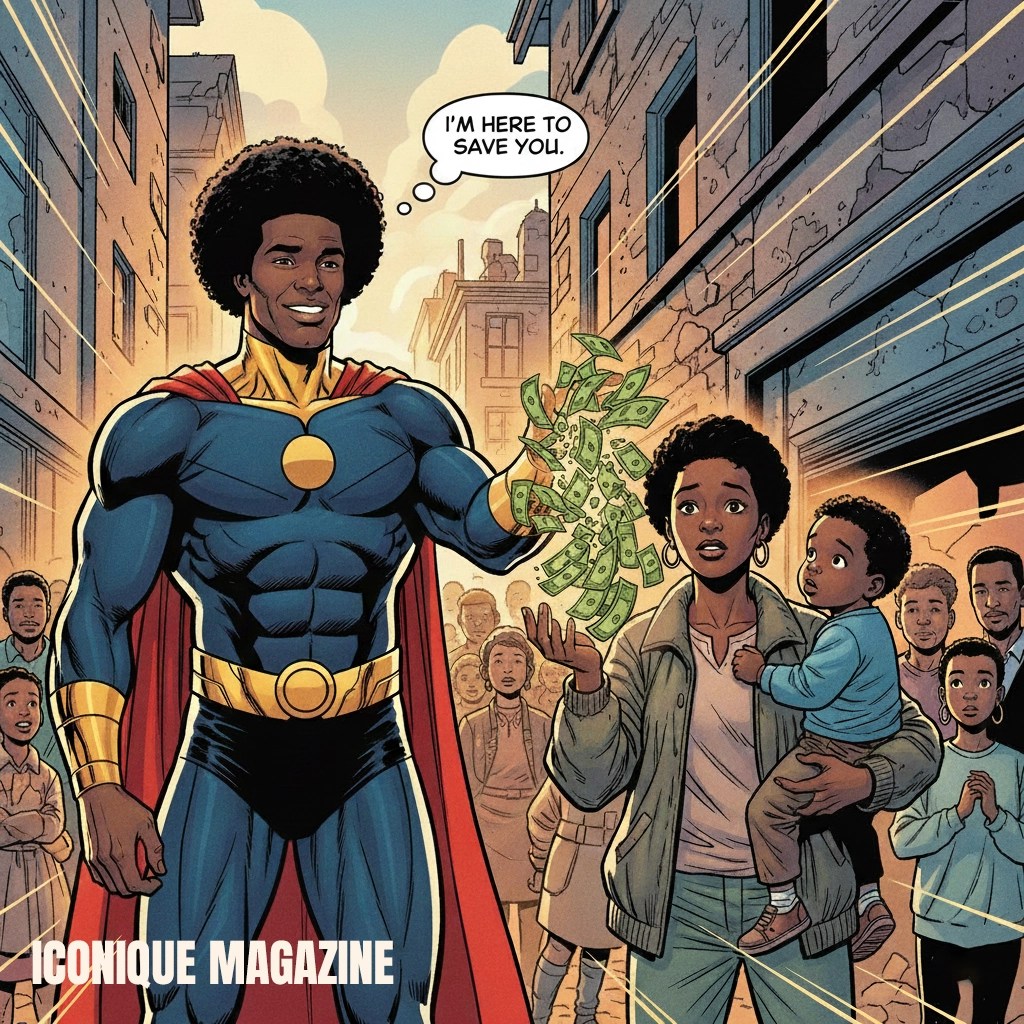


The Cost of Playing Hero
At first, this dynamic can feel exciting. You’re investing, helping, “proving” your loyalty. But over time, the price of this energy shows up in very real ways:
Emotional Burnout
You become the therapist, parent, sponsor, ATM, and romantic partner, all in one. Meanwhile, who supports you? Constant emotional output with no refill leaves you drained, irritable, and eventually numb.
Financial Strain
Covering rent, car notes, fines, phone bills, clothes, bottle service, nails, hair, trips — it adds up. Many “rescuer” types go into debt trying to maintain an image of being the provider, hoping it will secure loyalty.
Identity Loss
Your taste, hobbies, peace, and boundaries get sacrificed. Your world starts to revolve around managing their crises. You become “the one who always helps,” not a whole person with your own dreams and non-negotiables.
Emotional Manipulation
Once someone realizes you’ll always show up and always pay, it’s easy for them to lean into that. They may not even be evil — just human. But the dynamic becomes manipulative: tears and drama appear right when your patience starts to fade.
Why You Can’t Save Someone Who Doesn’t Want to Be Saved
This is the part many people don’t want to hear: You can support someone. You can encourage someone. You can be a safe space for someone. But you cannot:
• Want change for them more than they want it for themselves.
• Heal trauma you didn’t create.
• Buy your way into their loyalty.
• Force someone into a chapter they haven’t chosen yet.
People don’t change because you’re “good enough” or you sacrificed enough. They change when they decide the cost of staying the same is too high. Your hero costume doesn’t speed that process up. Sometimes it actually slows it down, because your rescuing shields them from consequences.
⸻
The Turnaround: From “Captain Save a Hoe” to “Guardian of My Peace”
You don’t have to become cold or selfish to leave this pattern. You just have to shift the direction of your protection.
Instead of protecting everyone else from their own choices, start protecting yourself from your old habits.
1. Name the Pattern
Stop sugarcoating. Ask yourself:
• Am I constantly fixing, funding, or explaining this person?
• Do I feel anxious when I don’t help?
• Do I secretly hope my sacrifices will finally make them choose me?
Honesty is the first exit ramp.
2. Re-Define What Makes You Valuable
You are not valuable because:
• You pay bills.
• You tolerate disrespect.
• You “hold someone down” while they drag you through the mud.
You are valuable because of your character, your integrity, your presence, your mind, your heart. That is what a healthy partner will see and appreciate — without requiring you to destroy yourself to prove it.

3. Learn the Power of Letting Adults Be Adults
You can feel compassion without becoming a crash pad. “I’m sorry you’re going through this” does not have to be followed by “I’ll fix it.”
Sometimes love sounds like:
• “I care about you, but I can’t keep rescuing you.”
• “This is something you’ll have to handle.”
• “My support has limits, and I’ve reached them.”
That’s not cold; that’s mature.
4. Set Hard Financial and Emotional Boundaries
Decide what you will and won’t do, then actually stick to it:
• “I don’t co-sign loans for anyone I’m dating.”
• “I won’t move you into my home without a plan and contribution.”
• “I won’t tolerate cheating, disrespect, or repeated lying — one time is enough to exit.”
If your “no” never means no, your “yes” loses meaning too.
5. Choose Partners, Not Projects
Ask yourself early:
• Do I respect how this person lives when I’m not around?
• Would I still want them if I couldn’t fix or upgrade anything in their life?
• Do they pour into me the way I pour into them?
If your attraction is rooted in their chaos, you’re not in love — you’re addicted to the feeling of being needed.
⸻
Healing the Part of You That Always Needs to Save
Underneath “Captain Save a Hoe” energy is usually a wounded part of you:
• The inner child who never felt chosen.
• The teen who thought they had to perform for love.
• The adult who fears that if they stop doing the most, they’ll be abandoned.
Healing means:
• Getting therapy or counseling if you can.
• Talking honestly with yourself, without bravado or excuses.
• Learning to sit with discomfort instead of immediately fixing someone else to avoid your own feelings.
It’s not glamorous, but it’s powerful. Once you start honoring yourself the way you keep trying to honor everyone else, your entire dating pattern will shift.
⸻

Final Thoughts: Retiring the Cape
“Captain Save a Hoe” is a messy phrase for a very real pattern: over-investing in people who haven’t shown they’re ready, willing, or able to truly invest back.
You don’t have to harden your heart or become anti-love. You just need to trade in the savior costume for self-respect and discernment.
It’s still okay to be generous.
It’s still okay to be supportive.
It’s still okay to want to uplift your partner.

The shift is this:
You’re no longer trying to save someone from themselves.
You’re choosing someone who joins you in building something healthy — without you having to lose yourself in the process.
Comment Below
Discover more from ICONIQUE MAGAZINE
Subscribe to get the latest posts sent to your email.
5 Comments
Too funny! 😂
All of this is completely valid and true. We as men have been groomed into believing that we must save the day and rescue everyone. And when we need saving no one is there, because you’re a grown man, figure it out. Great article.
This article hits the nail!!! I’ve been Captain Save a Hoe once or twice in my life. And I know people that are still wearing their capes. The peace I have now that I stand strong on my boundaries and will say no without guilt is priceless. Great article and advice
I definitely agree. This article can apply to both men and women because we have all tried to “Save a Ho”!!
There were no lies told I was one for 10yrs lesson learned, no looking back. Love the article